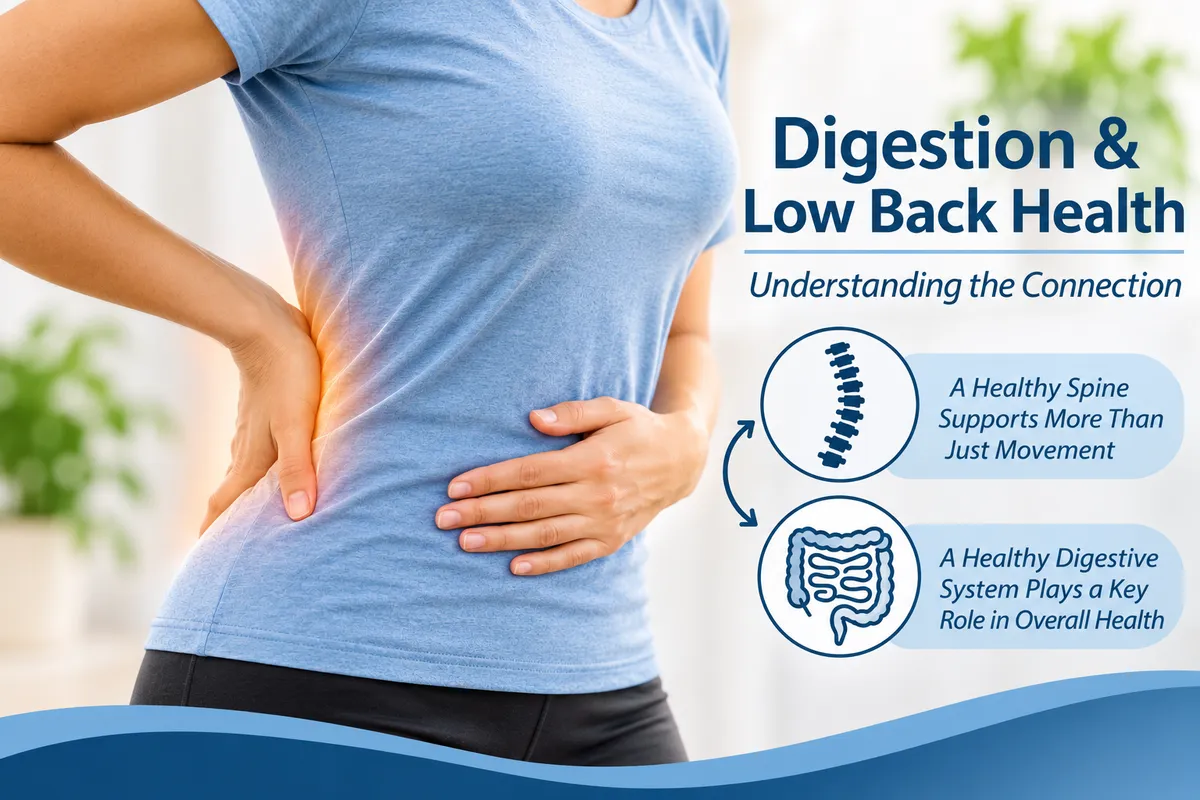
Digestion & Low Back Health: Understanding the Connection Between Your Spine and Digestive System
November Health Focus | Spine Pain Performance Center
Have you ever experienced low back discomfort alongside bloating, abdominal pain, or digestive issues? While these symptoms may seem unrelated, the spine and digestive system are connected through the nervous system. Understanding this relationship can help us take a more comprehensive approach to overall health and wellness.
This month at Spine Pain Performance Center, we are focusing on digestion and low back health, exploring how these two areas of the body may influence one another.
The Connection Between Your Spine and Digestive System
Your nervous system plays an important role in regulating many of the body's functions, including digestion. Nerves extending from the spinal cord communicate with the digestive tract, helping regulate processes such as intestinal movement, secretion, and other digestive activities.
The thoracic and lumbar regions of the spine are particularly relevant when discussing the relationship between spinal health and digestive function. These areas contain nerve pathways involved in communication between the brain and various internal organs.
Takeda et al. (2002) investigated a possible relationship between spinal changes, digestive symptoms, and immune function in individuals with Crohn's disease and allergies. Their research explored whether changes in the thoracic and lumbar spine could be associated with digestive symptoms, including abdominal pain, diarrhea, and constipation.
Although the findings suggest a possible relationship, the connection between spinal health and digestive function is complex and requires further research.
What Does the Research Say?
In their 2002 study, Takeda and colleagues examined 57 individuals with Crohn's disease. The researchers divided participants into a treatment group and a control group.
Seventeen participants received spinal adjustments, while 34 participants served as controls. Both groups continued their existing medical treatment.
The researchers reported that:
Twelve of the 17 participants who received spinal adjustments experienced long-term, stable remission of their symptoms.
Nine participants experienced alleviation of symptoms.
Back and abdominal discomfort were frequently reported among the participants.
The researchers observed spinal changes in the thoracic and lumbar regions among individuals with Crohn's disease.
The authors proposed that spinal changes and their potential effects on nerve function could be associated with digestive and immune-related symptoms (Takeda et al., 2002).
It is important to understand that these findings represent the results of one study. The research does not establish that spinal adjustments cure Crohn's disease or that spinal changes are the cause of digestive disorders. More rigorous research is needed to understand these potential relationships.
Why Low Back Health Matters
The low back, or lumbar spine, supports much of the body's weight and plays an important role in movement, stability, and everyday activities.
When the low back is experiencing discomfort, it can affect how you sit, stand, walk, exercise, and perform daily tasks.
Digestive discomfort can also affect your daily routine. Abdominal bloating, cramping, and changes in bowel habits may influence posture, movement, and overall comfort.
Although low back pain and digestive symptoms can occur together, they do not always share the same cause. Factors such as muscle strain, posture, activity levels, stress, and underlying medical conditions may contribute to symptoms in either area.
Recognizing the potential overlap can help encourage a more comprehensive approach to health.
Supporting Your Digestive and Spinal Health
At Spine Pain Performance Center, we believe that supporting your overall health involves looking at more than just one area of the body.
Here are a few ways to support your digestive health and low back wellness:
1. Stay Active
Regular physical activity supports mobility, muscle strength, and overall health. Walking and gentle movement can also help support normal digestive activity.
2. Prioritize Nutrition
A balanced diet that includes a variety of nutrient-rich foods can help support digestive health. Adequate hydration and appropriate fiber intake may also help promote regular bowel movements.
3. Strengthen Your Core
The muscles surrounding your abdomen and spine help support your posture and movement. Maintaining appropriate core strength can contribute to low back stability and function.
4. Pay Attention to Your Posture
Prolonged sitting and limited movement can contribute to discomfort for some individuals. Taking regular movement breaks and maintaining comfortable positioning throughout the day may help support spinal health.
5. Manage Stress
Stress can influence both physical comfort and digestive symptoms. Relaxation techniques, adequate sleep, and regular activity can help support overall wellness.
How Chiropractic Care Fits Into the Picture
Chiropractic care focuses on the evaluation and management of musculoskeletal conditions, including certain types of back pain.
At Spine Pain Performance Center, our approach includes evaluating spinal function, movement, and areas of discomfort to help determine an appropriate care plan.
For individuals experiencing low back discomfort, chiropractic care may be one component of a broader approach to improving mobility and function.
While the research by Takeda et al. (2002) explored a potential connection between spinal adjustments and digestive symptoms, chiropractic care should not be considered a replacement for medical evaluation or treatment of digestive disorders.
Conditions such as Crohn's disease, irritable bowel syndrome, and other gastrointestinal disorders require appropriate medical assessment and management.
Our goal is to help patients understand their bodies, support their musculoskeletal health, and make informed decisions about their care.
Take a Whole-Body Approach to Your Health
Your spine and digestive system are both important parts of your overall well-being. Although research continues to explore how these systems interact, maintaining a healthy lifestyle, staying active, and addressing discomfort early can all contribute to better health.
If you are experiencing persistent low back pain, digestive discomfort, or symptoms that seem to occur together, consider discussing them with an appropriate healthcare professional.
At Spine Pain Performance Center, we are here to help you take steps toward feeling and functioning your best.
Ready to prioritize your spinal health?
Contact Spine Pain Performance Center to learn more about our chiropractic services and how we can help support your wellness goals.
Spine Pain Performance Center
Geneva, Illinois
630-232-6400
References
Takeda, Y., Arai, S., & Touichi, H. (2002). Long term remission and alleviation of symptoms in allergy and Crohn's disease patients following spinal adjustment for reduction of vertebral subluxations. Journal of Vertebral Subluxation Research, 4(4), 129–141.


