
The Assessment Is the Starting Point, Not the Intake Form
Most evaluations tell you where it hurts.
That's the wrong starting point.
Most clinical intake processes produce the same information: where is the pain, when did it start, how did it rate on a scale of one to ten. This is useful information. It is not a mechanical picture.
Knowing where something hurts tells you where the output is. It does not tell you where the problem originates. It does not reveal the load pattern. It does not identify the primary subluxation driving the compensation. It describes a symptom. The symptom is rarely the starting point.
A Movement Intelligence Assessment is built around a different question. Not where does it hurt, but what's the mechanical pattern producing that outcome, and where does it begin.
What the Assessment Is Actually Evaluating
A Movement Intelligence Assessment evaluates the spinal system as a mechanical unit. Not individual segments in isolation. Not the area of complaint first. The whole system, with attention to where load is being distributed, where motion is restricted, and where compensation patterns are active.
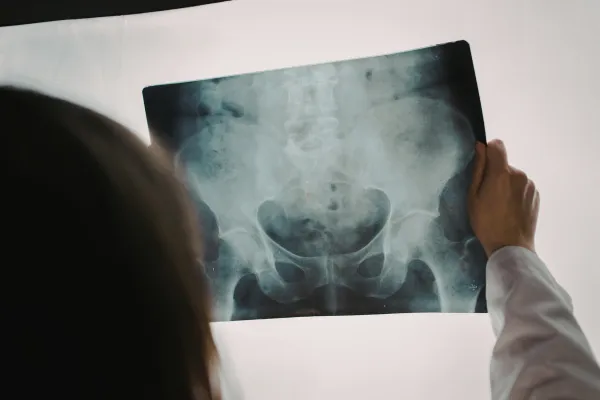
The evaluation includes postural load analysis, how weight distributes through the system at rest and under demand. It includes segmental motion analysis, where motion is normal, where it's restricted, and where hypermobility is compensating for restricted segments upstream or downstream. It includes neurological screening and, where indicated, digital X-ray analysis to see what cannot be observed from surface examination alone.
The result is not a diagnosis of the area that hurts. It's a mechanical map showing the primary subluxation, the compensation chain it has produced, and the specific segments that are absorbing excess load as a result.
Why the Map Has to Come Before the Correction
Precision correction without a precise picture is not precision correction. It is a targeted guess.
There is a significant difference between adjusting the area of complaint and correcting the primary subluxation. The area of complaint is often downstream. It hurts because it is absorbing more load than it was designed to. Adjusting it directly can produce temporary relief. It does not change the load distribution that is producing the excess demand on that area.
The primary subluxation, the segment that lost its mechanics and initiated the compensation chain, is often not where the pain is. Sometimes it is adjacent. Sometimes it is several segments away. In many cases, it's in a completely different region of the spine from the area that keeps failing.
The map shows you where to start. Without it, the most common approach is to address what is visible, which is the symptom. The symptom is not the driver.
What the Assessment Reveals That Cannot Be Found Any Other Way
The mechanical pattern that drives recurring pain does not show up on an MRI unless the structural damage is already significant. It does not show on a standard orthopedic exam. It does not respond predictably to a standard treatment protocol.
What the assessment reveals: the exact location of the primary subluxation. The compensation chain it has produced. Which segments are restricted and which are hypermobile. What load is being absorbed where, and how long that pattern has likely been active.
For active people dealing with recurring pain, this picture often explains what years of other care did not. Not because the previous providers were incompetent, but because the evaluation was not designed to find the mechanical pattern. It was designed to identify the symptom and treat it.
What Happens When the Picture Is Clear
When the mechanical picture is clear, precision correction is possible. Not adjustment of the complaint area. Correction of the primary subluxation at its source.
The first correction changes load distribution across the entire system. The compensation chain no longer has a reason to run. The downstream structures that were absorbing excess demand begin to recover in a normal mechanical environment.
This is where the clinical outcomes start to follow a different trajectory. Not because treatment was more aggressive. Because it was more precise.
The assessment is not a formality. It is the step that makes precision care possible. Without it, you are treating what you can see. With it, you are correcting what is actually driving the pattern.
Schedule a Gonstead Evaluation and Functional Movement Screen at Spine Pain and Performance Center.
KEY TAKEAWAYS
Most evaluations identify where something hurts. A Movement Intelligence Assessment identifies the mechanical pattern producing that outcome.
The primary subluxation is often not where the pain is. It is upstream in the compensation chain.
Postural load analysis, segmental motion analysis, neurological screening, and X-ray give the complete mechanical picture.
Correcting the primary subluxation requires knowing where it is. Precision starts with the map.
The assessment is what separates symptom-directed care from mechanically precise correction.
REFERENCES
Gonstead CS. Gonstead Chiropractic Science and Art. Sci-Chi Publications, 1975.
Leboeuf-Yde C, Lauritsen JM. The prevalence of low back pain in the literature: a structured review of 26 Nordic studies from 1954 to 1993. Spine. 1995.
Deyo RA, Mirza SK, Martin BI. Back pain prevalence and visit rates: estimates from U.S. national surveys. Spine. 2006.
Brennan GP, et al. Identifying subgroups of patients with acute/subacute "nonspecific" low back pain. Spine. 2006.